Miami’s Historic Preservation
I’ve seen a surge in public concern surrounding historic properties in Miami. Of course, I’m very happy about it, but I’m also critical (as usual) of the action being done by the people addressing concern.
First, let’s get the mutual understanding that Miami has never been great at preserving historical lands or buildings.
Although we have the largest art deco district in the United States, (the Miami beach art deco district), we didn’t exactly always protect our historical buildings. The 70s and 80s gave way to many of those buildings being neglected and improperly preserved. Preservation laws were first created in the mid 80s. By that time bad restorations, changing property owners, abandoned properties, and complete lack of preservation led to what it is today- Art deco buildings with no trace of actual Art Deco design inside the buildings, only the facades. Even then, the layers of paint, colors not true to the building, and missing/wrong architectural accents lessen the experience of the historical structures.
This is apparent all over Miami.
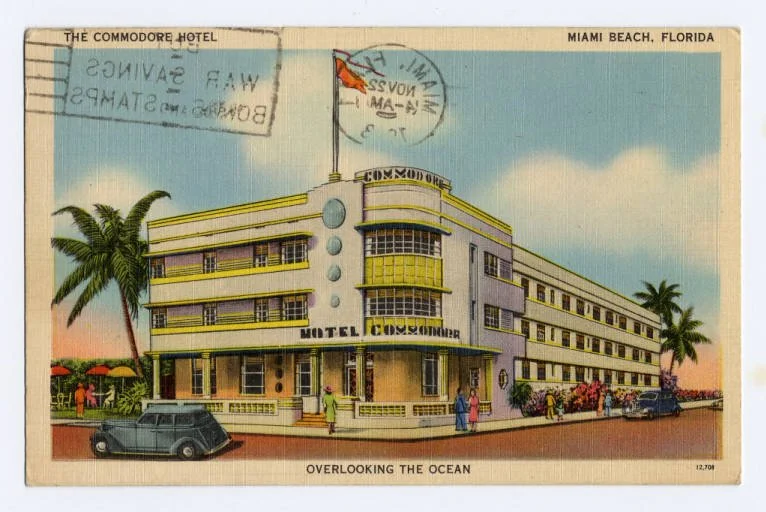
Commodore Hotel, Collins Ave. Cor. 14th St., Miami Beach, Florida. Postcard
Places such as the Ace theater and the Playhouse in Coconut Grove have been closed and neglected for years. The Freedom Tower, despite previous restorations and conservations, has had its problems in the past (the building has recently gone under the proper conservation and is in good condition). Buildings such as Miami City Hall, Vizcaya, Deering Estate and Coral Gables City Hall are some examples of historical structures that are being maintained properly.
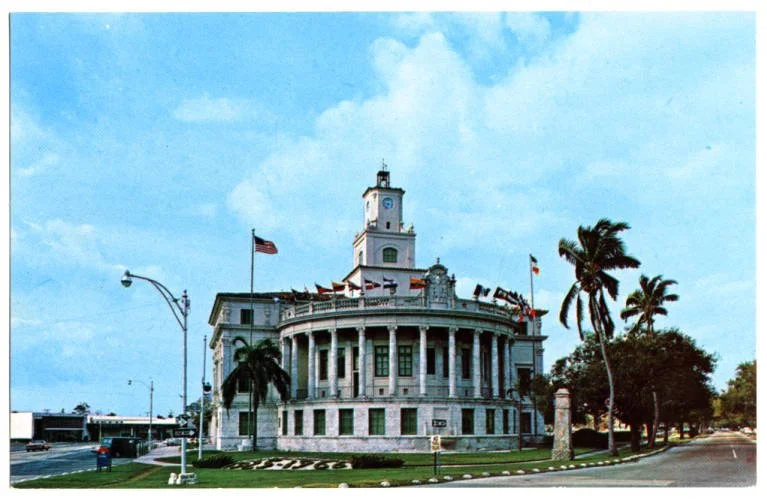
Coral Gables City Hall; built in 1927/28.
Historical residential homes should not be required (they’re not) to be historical inside- but anyone with taste would try to keep some historical aspects, if possible.
Residential homes in historic neighborhoods are the ones affecting and contributing to the lack of historical preservation in Miami the most. People have been doing work without permitting even after laws were established. Florida Rooms made into bedrooms, nameplates on buildings covered up, patio tile work being broken up, textured stucco being redone to look flat- the list is endless. Also, those white boxes with windows that keep popping up; the rich and tasteless.
I must say, the historical preservation offices and board have been better at regulating in recent years.
The work done by the board is not only to preserve historical buildings, but some of the natural resources too. A tree cannot be cut or moved on a historical property without their approval.
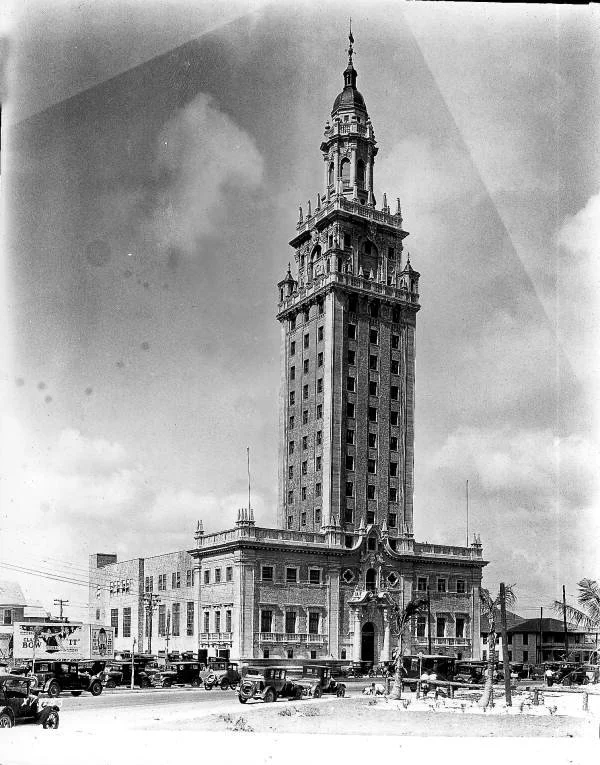
Miami News Tower, also known as the Freedom Tower. Completed in 1925.
Is it too late? Not really. We might be behind, but that doesn’t mean it’s over. The Historic Preservation Board meetings take place the first Tuesday of every month (except August) at City Hall: 3500 Pan American Drive. Miami, FL, 33130. It’s free, and every agenda item has time allocated for public comment. This is when and where you can voice your opinion and actually make an impact.
Here’s a link to their website: https://www.miami.gov/My-Government/Departments/Planning/Historic-Preservation-Main-Page
See you there
V.N.
